
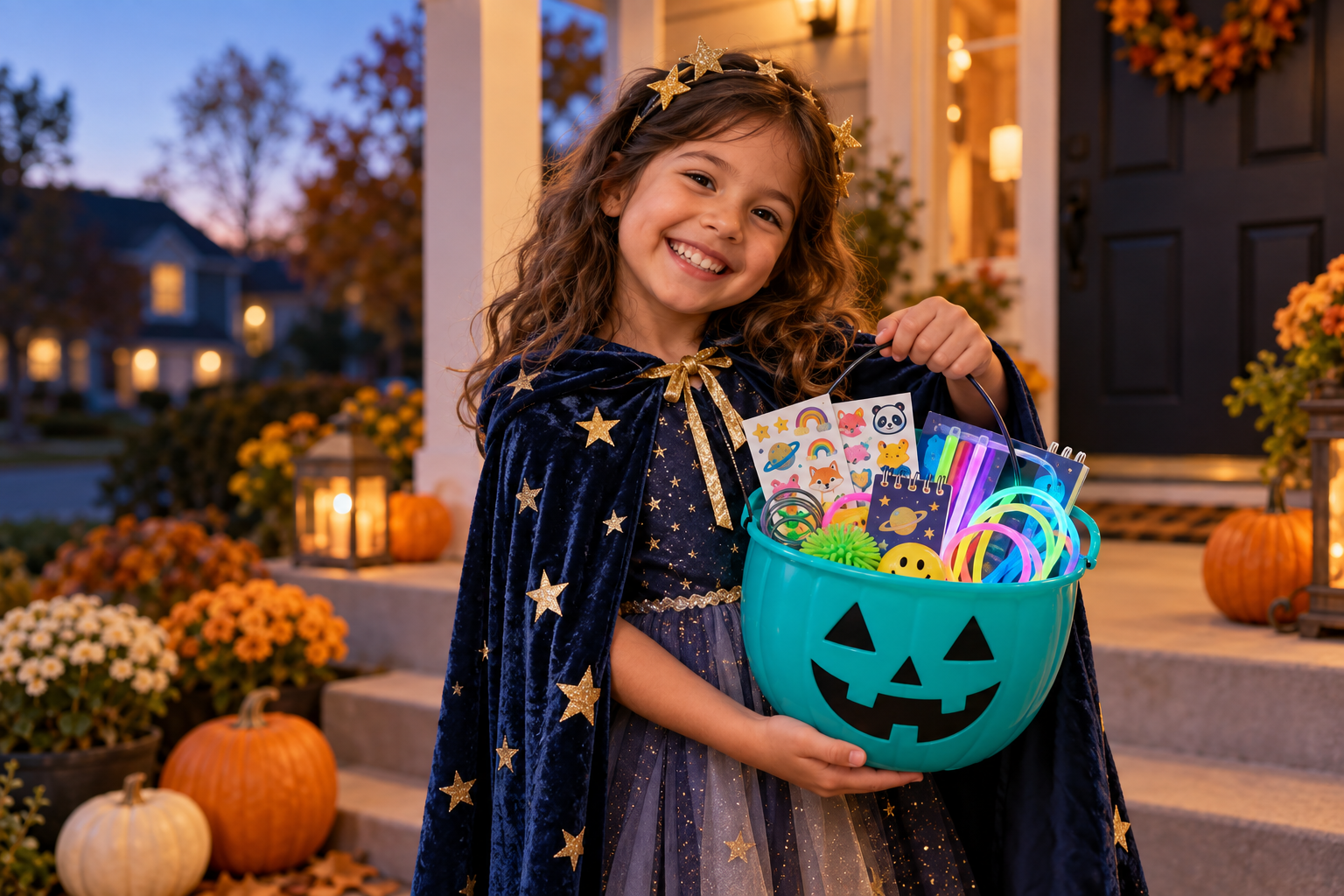
A pumpkin painted teal on a front step is a small signal with a big welcome. It tells every trick-or-treater, including children who can’t have candy, that there is something here for them too.
At Ladder Health, we’re going teal this October. Here’s what the Teal Pumpkin Project is, why it matters, and a few easy ways your family can take part. You can also download our free activity sheet.
What is the Teal Pumpkin Project?
The Teal Pumpkin Project is a campaign that makes Halloween safer and more inclusive for children with food allergies. Participating homes offer nonfood treats, such as stickers, bubbles, or glow sticks, alongside or instead of candy.
It started with one family in East Tennessee. Becky Basalone, whose son has a severe food allergy, wanted him to enjoy trick-or-treating without having to explain his allergy or turn down treats at every door. Her family painted a pumpkin teal and offered nonfood treats. The idea spread through the Food Allergy Community of East Tennessee, and Food Allergy Research & Education (FARE) took it national in 2014.
What does a teal pumpkin mean?
A teal pumpkin means the house has nonfood treats available. Teal is the color of food allergy awareness. For a child who has to skip most of what’s in the candy bowl, seeing one can turn a stressful stop into a fun one.
Why the Teal Pumpkin Project matters
Food allergies are common. According to FARE, about 1 in 13 children in the U.S. has a food allergy, which is roughly two children in every classroom. Many popular Halloween candies contain common allergens like milk, peanuts, tree nuts, eggs, soy, or wheat, and mini-size candies don’t always carry the same ingredient labels as full-size ones.
Food allergies aren’t the only reason a child might pass on candy. Some children follow special diets, eat a limited range of foods, are sensitive to certain tastes or textures, or get some or all of their nutrition through a feeding tube. For all of these kids, a nonfood treat means they can collect something they can enjoy and keep, just like everyone else.
Why going teal matters to Ladder Health
Ladder Health provides virtual speech, occupational, physical, and feeding therapy for young children. Our feeding therapists work with children and caregivers on the everyday moments of eating, from trying new foods to making mealtimes less stressful.
We know that holidays built around food can feel complicated for these families. Offering nonfood treats is a simple, practical way for any household to make Halloween more welcoming. That’s the spirit we want to support this season.
How to offer nonfood Halloween treats
Making your doorstep more welcoming takes just a few small changes:
- Pick a few nonfood options. Stickers, bubbles, and glow sticks are easy favorites. See more ideas below.
- Set out a teal pumpkin. A teal pumpkin by your door lets families know you have treats every child can enjoy.
- Keep treats in a separate bowl. You can still hand out candy. Keeping nonfood treats in their own bowl helps avoid mix-ups.
- Let kids choose. Hold out both bowls and let each trick-or-treater pick what works for them.
Nonfood Halloween treat ideas kids love
- Stickers and temporary tattoos
- Bubbles
- Glow sticks and glow bracelets
- Pencils, erasers, and mini notepads
- Crayons or mini coloring books
- Bookmarks
- Small toys like spinning tops, mini slinkies, or finger puppets
- Bouncy balls (choose larger sizes for toddlers)
Tip: Choose age-appropriate items, and keep very small pieces out of the bowl for little trick-or-treaters.
Halloween tips for families when food is complicated
If your child has food allergies, a special diet, or feeding challenges, these ideas can help keep the focus on fun:
- Talk through the plan ahead of time. Let your child know what the night will look like, including what happens with the treats they collect.
- Try a treat trade. Your child can swap candy they can’t eat for a small toy, a book, or a special activity with you.
- Lean into the non-food fun. Costumes, decorations, walking with friends, and ringing doorbells are often the best part.
- Look for teal pumpkins. Check the Teal Pumpkin Project map to find participating homes near you before you head out.
- Follow your care team’s guidance. For allergies or special diets, your child’s pediatrician, allergist, or therapist is the best source for what’s safe for your child.
Download our free Teal Pumpkin activity sheet
“Halloween Fun with a Teal Pumpkin” is a free printable from Ladder Health. Children and caregivers can read a short story together, color a pumpkin, trace a path, and pick out treats that aren’t food. It takes just a few minutes and carries a simple message: small choices can help more children join in.
Link Download the free activity sheet (PDF)
Use it at home, at a class party, or anywhere kids gather this Halloween.
For pediatricians and clinics
The activity sheet works well in waiting rooms and as a take-home for families. Feel free to print copies. If you’d like printed copies delivered, your Ladder Health liaison can bring some to your office. To refer a family, visit our referral page or learn more on our For Providers page.
Support for feeding, all year long
If you have questions about how your child eats, a good first step is to talk with your pediatrician. Ladder Health’s feeding therapists coach caregivers through play and everyday routines so children can build skills at home, between visits. In our experience to date, families reach their first evaluation in less than two weeks from referral.
Learn how Ladder Health supports families
Teal Pumpkin Project FAQs
What does a teal pumpkin mean on Halloween?
A teal pumpkin means the home offers nonfood treats, so children with food allergies or other dietary needs can trick-or-treat safely.
Who started the Teal Pumpkin Project?
It began with Becky Basalone and the Food Allergy Community of East Tennessee. Food Allergy Research & Education (FARE) launched it nationally in 2014.
Do I have to stop giving out candy to participate?
No. You can offer candy and nonfood treats. Keeping the nonfood treats in a separate bowl helps avoid cross-contact.
What are good nonfood Halloween treats?
Stickers, bubbles, glow sticks, pencils, erasers, mini notepads, crayons, bookmarks, and small toys are all popular choices. Pick age-appropriate items for young children.
Is the Ladder Health Teal Pumpkin activity sheet free?
Yes. Download and print as many copies as you like for home, school, or your clinic.
Sources: Food Allergy Research & Education (FARE), Teal Pumpkin Project and Facts and Statistics.
.svg)